
How Feng Shui Can Help Prevent Seasonal Affective Disorder This Winter
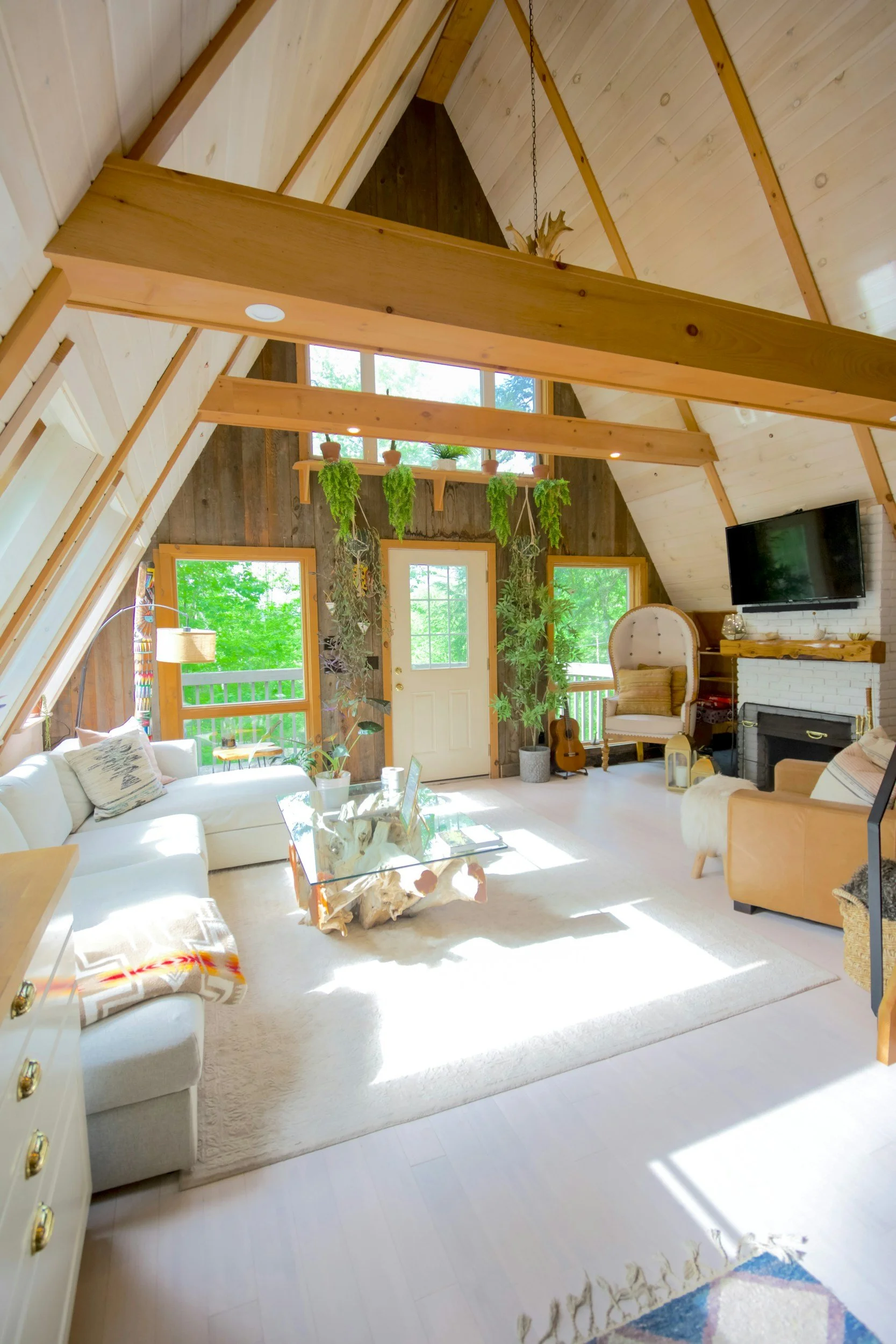
Natural light, plants and clear spaces support happiness and calm.
If winter leaves you feeling heavier, more tired, or less like yourself, you’re not imagining it, and you’re not failing at self-care.
In many ways the modern lifestyle ignores the significant influence and effect the change of seasons can have on our health and emotional wellbeing. Because we think of seasonal changes as being outside of us, we don’t recognize the shift within us.
Your nervous system is constantly responding to your surroundings, especially during winter, when energy naturally moves inward.
Ancient civilizations and cultures understood the cycle of nature, celebrating the changing of the seasons because and the importance of living in harmony with day and night. They survived and thrived through their connection and collaboration with the Earth and Sun’s movement. This can be interpreted as being in alignment or flow life as in Yin and Yang balance.
Why you might be experiencing SAD.
This isn’t just about mood, it’s about how your body is adapting.
SAD is a subtype of depression that occurs during seasonal changes such as fall to winter as the hours of daylight shorten the diminished sunlight and the temperature cools though some people experience SAD at reverse season cycles. The depressive period can last for 5 months and begin to lift during the spring, though people also experience SAD at other times of the year.
Studies show that people with SAD may have a phase shift or delayed circadian rhythm response; an example of Yin and Yang being out of balance within the body. We cannot change the orbit of the planet or the time that the sun rises and sets so it is crucial that our body follow the cycle of the natural world.
In many ways the modern lifestyle ignores the significant influence and effect the change of seasons can have on our health and emotional wellbeing. Because we think of seasonal changes as being outside of us, we don’t recognize the shift within us.
Ancient civilizations and cultures understood the cycle of nature, celebrating the changing of the seasons because and the importance of living in harmony with day and night. They survived and thrived through their connection and collaboration with the Earth and Sun’s movement. This can be interpreted as being in alignment or flow life as in Yin and Yang balance.
How can Feng Shui help SAD?
Feng Shui is the art and science of placement and one of the 8 branches of Chinese medicine. Feng Shui is an ancient health design concept that helps the life force to flow freely, bringing health, happiness and abundance.
According to Feng Shui an environment can either support your life force (Qi) or diminish it. We can intuitively sense whether a place has a good “vibe” or not, though often we override inner messages or information with our intellect.
An example of “bad” Feng Shui, is lack of windows that allow for natural light or cluttered space, dishes piled in the sink etc.
People that are prone to SAD can also experience something called sundown syndrome symptoms and may be related to bi-polar disorder. Cognitive changes occur in the late afternoon and evening and the person can have mood swings, anxiety, poor focus and feelings of unease. There is also related metabolic inbalances, sleep disruption and insomnia.
It is estimated 10% of the US population suffers from SAD, seasonal affective disorder. One of the contributing factors to SAD is the disruption of the body's biological clock, (circadian rhythm) is the 24 hour internal clock regulated by the pineal gland deep in the brain. The pineal gland has photoreceptors that respond to environmental changes such as sensing daylight and night, regulating the sleep wake cycle, producing hormones such as melatonin for sleep.
How to use Feng Shui, the ancient art and science of placement to prevent SAD?
Natural light:
The East is the most important direction to face because it is the direction of Sunrise. Waking and receiving natural light helps to signal to the pineal gland that it is day. Our biology is not that different from animals that wake with the sun rise and sleep when the sunsets.
How the body receives light plays a critical role in our health and wellness, so having a home environment that maximizes natural sunlight in the morning hours is critical.
Balancing the body’s circadian cycle with morning light can help to “offset” SAD. Studies indicate low levels of Vit D have been found in people that have SAD that can be from poor absorption in the diet or not enough sunlight.
Having a window facing the East or South East will allow natural light to enter during the day supporting mood regulation.
Light and warm colors representing Summer are also uplifting.
Clearing clutter:
Stuck energy or negative thought forms and imprints in the home can cause feelings of unease and irritability and then be amplified with Season changes.
Research shows that the environment we live and work in plays a crucial role in mental health and quality of life.
First impression: enter the home and notice where your eye goes. Is there clutter? Areas that have clutter tend to be where the energy gets stuck and can be a “dead” zone. Removing the clutter is also about getting organized and having space work for you. In some cases you cannot change the configuration such as a wall or corner but can do a Feng Shui cure. A plant or use of a crystal sphere helps to move the energy.
In a home having areas and space that have a clear function helps to move energy.
Mari Kondo’s life changing strategy to spark joy by decluttering has some good advice, though minimalism is not necessarily a solution for SAD.
We often hold on to things that no longer serve us but have emotional attachment that can later turn to mental clutter and overwhelm.
It is important to keep the things that bring you happiness and joy when you look at them. It could be a refrigerator magnet that has happy memories from a trip.
Many cultures will mark Spring with cleaning and clearing out or repairing broken things like before Chinese New Year. This is to begin the New Year fresh and with optimism and abundance.
Entrance of the home should be clear and inviting, well lit and light color neutral colors that signify freshness. If there is a table, add flowers that act as a greeting when entering and have a designated place for removing shoes, and storing jackets and umbrellas. This is helpful for efficiency.
No open garbage bins should be at the entrance, they need to be out of sight. Look for “other” types of containers that you can “disguise” so that it does not create a feeling of repulsion.
Using Color:
Feng Shui means Wind and Water and describes the movement and power of Qi or life force. It uses the 5 elements (Wood, Fire, Earth, Metal & Water) that coincide with Seasons and Colors. In this way we can balance a space by making sure there is harmony with the elements. Ideally each room will have all 5 elements represented.
Perhaps adding an accent of Red or a bright print such as a pillow to a couch or green hand towels in the bathroom.
Wood/Spring: Green
Fire/Summer: Reds/ Orange
Earth/ Autumn : Yellow/Browns
Metal/ Fall: White
Water/ Winter: Black/ Blue
Bedroom: Creating balance and harmony is important because it is where you spend ⅓ of your time and your unconscious is processing. People with SAD and depression often have difficulty getting restful sleep which can cause malaise and lower levels of serotonin (happy hormone) .
Have matching pillow cases in a cool color such as a blue hue, it has a calming effect. Matching pillow cases and side tables create a balanced energy and is also a Feng Shui cure for attracting a partner.
The color of the bedroom should have muted and cooler tones of blue or gray that are soothing, but not too dark. Soft lighting and soft bedding. No computers or screens that can give off blue light, these disrupt sleep patterns and can make SAD worse.
Lavender essential oils in a diffuser can support a calm mood.
Bathroom: High quality cotton bath towels and some bright hand towels. The idea is that things that are in contact with your body should be soft and high quality. This is a form of self-care.
Before it takes 5 minutes before going to sleep, straighten the hand towels and shower curtain, wipe out the sink, clean off the mirror, empty the wastebasket and close the lid on the toilet. Put any bottles or cosmetics away or tidy them if they are on a shelf. When we wake up the first thing we do is go into the bathroom. Starting the day with a clean and tidy bathroom helps to calm the mind.
Kitchen: The kitchen is where we prepare food for nourishment, a bowl with some fruit on the counter symbolic of abundance and nutrition. Having fresh fruit symbolizes abundance and it has vitamins and minerals that can support a better mood.
In particular oranges instead of apples, oranges are warm and they have segments that means they multiply and can be shared(and they are also good for digestion) A pitcher of water to quench and glasses.
Living room: The living room is a place for sharing space. Having seating that creates a U shape for guests to sit around is a way to create community. A low coffee table as central where guests can partake in conversation or to relax and talk. A round mat or plate with a candle can evoke a campfire effect.
2. Plants & Fresh flowers: Flowers are symbols of fertility because they have pollen and reproduce, their bright colors, and fragrance draw you in. Buying fresh flowers is uplifting and can be an act of self-love.
During the Winter poinsettias add the warmth and energy with the deep velvety red colors.
With any plants keeping them healthy and fresh is key, a dead plant is not good feng shui.
The best Feng Shui plants are succulents and bamboo (which is symbolic of strength and flexibility).
There are many beautiful silk flowers and plants that can also embody the vibration of what live flowers and plants represent.
You can also have a beautiful picture of plants and flowers that can serve the same function.
Sound: There is so much noise from the buzzing of text messages and “dings" we are all affected by sounds.
Music is a way to lift mood as well as support peace and tranquility. Music taps into our nervous system with a vibration that moves energy, playing happy music can lift sadness.
Using these ancient principles we want to make sure there is the free flow of “Qi”, life force and balance and harmony in the home to avoid periods of SAD.