
I Haven’t Changed My Routine. Why Am I Experiencing Sudden Shoulder Pain?
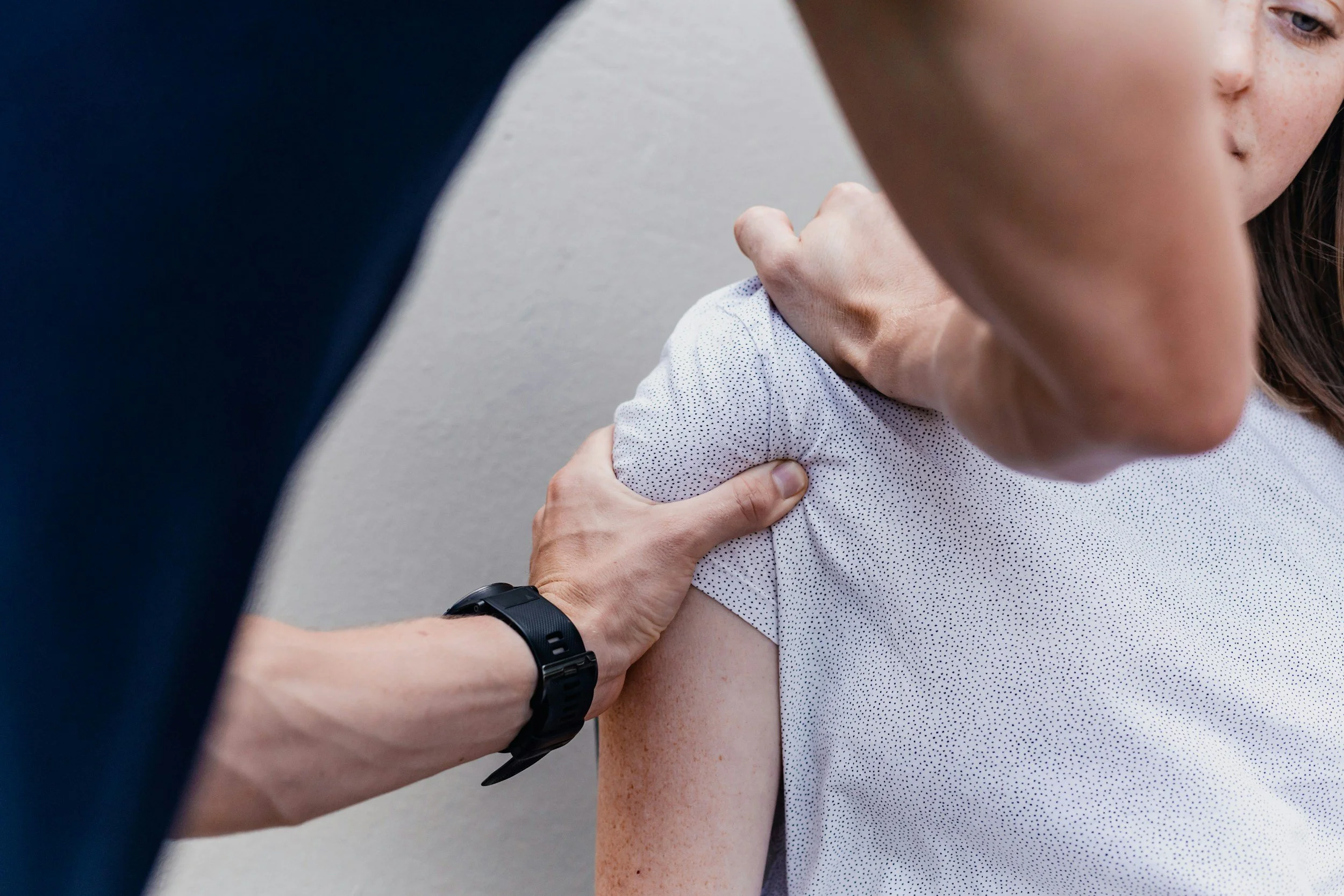
A licensed acupuncturist palpating a woman's shoulder to assess sudden joint pain and muscle tension caused by perimenopause.
If you haven't changed your workout routine or injured yourself, your sudden shoulder pain might be hormonal. During perimenopause, declining estrogen levels can increase inflammation and reduce lubrication in your joints, leading to unexpected stiffness and pain. The good news is that acupuncture is highly effective at reducing this inflammation, balancing hormones, and restoring your range of motion.
For women approaching their late 40s and 50s, the hormonal fluctuations of perimenopause can coincide with new body aches, joint stiffness, and slower recovery. It may feel like post-workout soreness that never completely goes away.
Increased inflammatory conditions such as plantar fascia pain, aching knees, small meniscus injuries, stiff or frozen shoulders, and irritated tendons may begin to appear or become more persistent. Similar musculoskeletal symptoms can occur during pregnancy and perimenopause, when hormonal changes can affect joint stability, ligaments, and connective tissue.
The body functions on a 24-hour metabolic clock known as the circadian rhythm. This internal clock is influenced by day and night, sleep, activity, eating patterns, and seasonal changes.
Imagine the inside of a clock with multiple gears working together. Over time, changes in one part of the system can affect how the other parts function. Your workouts and daily routine may be the same, but your body is always in a state of transformation.
Your doctor may tell you that your estrogen levels are normal because you still have a period. But having a period does not reflect the hormonal fluctuations throughout a cycle or periods of lower estrogen. A single blood test provides only a snapshot of the hormones circulating in your blood, not the metabolic changes affecting your tissues.
Estrogen interacts with muscles, tendons, cartilage, bone, and inflammatory pathways. As hormone patterns change, the way your body responds to strain and recovers from ordinary activity may also change, even when the activity itself has not. But these shifts go far beyond muscle and bone. Because estrogen drives collagen production and cellular hydration, you may also notice changes in your physical exterior, like drier skin, brittle nails, and thinning hair. Internally, shifting hormones disrupt temperature regulation and the brain chemistry required for deep rest, making quality sleep much harder to come by.
Could Your Workout Be Part of the Problem?
Hormones are only one part of the picture. Stress also affects recovery.
Cortisol helps us respond to stress. But when stress continues without enough recovery, it can interfere with sleep, increase muscle tension and pain sensitivity, and affect tissue repair.
This may help explain why a simple activity or workout you have done for years suddenly leaves you feeling sore, stiff, or injured.
This applies to men as well as women. For men, it may appear as a shoulder, knee, Achilles tendon or lower-back injury that keeps returning. Once the pain improves, the tendency is to resume the same workout at the same intensity, only to cause inflammation or injury again.
This applies to men as well as women. For men, it may show up as a shoulder, knee, Achilles tendon, or lower-back injury that keeps recurring. Once the pain improves, the tendency is to return to the same workout at the same intensity, only to cause inflammation and injury again.
The Body Moves Through Cycles of Transformation
Chinese medicine has always viewed health and wellness through cycles of growth, maturation, and transformation.
Female development is described in seven-year cycles: 7, 14, 21, 28, 35, 42, and 49. Male development is described in eight-year cycles: 8, 16, 24, 32, 40, 48, 56, and 64.
These cycles provide a traditional framework for understanding that through biological stages of maturation and development our needs change.
What worked for you at 28 or 32 may be less effective, or may no longer work at all, at 49 or 56.
This does not mean that chronological age determines what you can do. It means the way you care for your body must evolve as your body evolves.
“No Pain, No Gain”: Are You Helping Yourself or Making Yourself Worse?
Many people interpret slower results as a reason to push themselves harder. This comes from ideas about success that equate discipline with forcing yourself through difficulty and pain.
There is a difference between the temporary soreness that comes from challenging your body and pain that signals strain, overload or injury. Continuing to push through pain can turn a temporary problem into chronic pain or recurring injury.
Balance, Heal and Transform
When we are in pain, exhausted or navigating a health transition, our first response may be to ignore it or look for a quick fix. Symptoms may disappear for a short period, only to return. This is because true healing happens through alignment.
The principles of acupuncture and Chinese medicine are rooted in Yin and Yang. They align with circadian rhythm and the body’s natural ability to repair itself. While Western medicine often focuses on symptoms as the problem, Chinese medicine looks for underlying patterns that may be causing dysfunction and interfering with healing.
Healing is not a switch you can simply flip. It happens in three essential stages:
Balance: The body must first find equilibrium and calm the nervous system. Healing becomes more difficult when the body is under continuous stress or overload.
Heal: Once balance is restored, the body’s natural mechanisms of repair and recovery can take place.
Transform: Once healing has occurred, the body can adapt and become stronger. This is where transformation happens.
Recovery Time Is Not Optional
Recovery is not empty time between treatments or workouts. It is when the body carries out the work of repair.
When I recommend at least three months for an initial period of treatment and recovery, patients sometimes want to negotiate that time down. Others increase their physical therapy exercises because they believe more will produce faster results.
In this case, more is not better.
Muscles, tendons, connective tissue and the nervous system have their own repair cycles. Treatment can support those processes, but it cannot force the body to complete them before it is ready.
Less pain does not necessarily mean you have fully recovered. The body can compensate for a long time, creating the illusion that everything is fine. The evidence of incomplete healing may appear later as recurring pain, a new injury or a problem that becomes chronic.
Three months does not guarantee that every condition will be resolved. It gives us a meaningful period to observe how your body responds, reduce overload and begin rebuilding a stronger foundation.
Mindset Reset: Recovery Is an Activity
As a culture of doing we need to change our mindset around the definition of recovery.
Elite athletes and performers treat rest and recovery as part of active training because it is viewed as the primary mechanism for repair and mental agility. Adapting does not mean that you have to stop exercising. Movement and strength remain important as we age. The goal is to become stronger without repeatedly overloading the joints and connective tissue.
This may mean:
Modifying workout intensity
Using visualization and meditation
Resting between workouts so repair can occur
Gradually rebuilding the capacity of an injured joint or tendon
Following the prescribed amount of physical therapy instead of adding more
Acupuncture and manual therapies
Persistent, worsening or unexplained pain should be properly evaluated rather than treated only as a fitness problem.
Give Your Body the Raw Materials for Repair
Nutrition provides the protein, vitamins, minerals, and essential fats the body uses to maintain muscle, bone, and connective tissue.
Protein
As we age or have injury we need more protein to support metabolic function and muscle maintenance and tissue repair. Sources may include fish, poultry, eggs, tofu, tempeh, beans, lentils, and other foods that work for your body.
Omega-3 Fatty Acids
Salmon, sardines, and other fatty fish provide EPA and DHA. Flaxseed, chia seeds, and walnuts provide ALA, a plant-based omega-3 fatty acid. Fish-oil supplements may be appropriate for some people, but the product and amount should be selected individually. Speak with your healthcare practitioner before using fish oil if you take medication, have a bleeding disorder, or are preparing for surgery.
Soy, Seeds, and Phytoestrogens
Foods such as tofu, tempeh, edamame, flaxseed, and sesame seeds contain plant compounds known as phytoestrogens. Phytoestrogens are not the same as human estrogen and do not simply replace the estrogen your body produces. They have much weaker estrogen-like activity and can be included as part of a varied, nutrient-dense diet.
Collagen and Vitamin C
Collagen provides amino acids that the body can use as building materials. Research suggests that collagen or gelatin combined with appropriate exercise may support collagen synthesis, but a supplement cannot compensate for inadequate recovery or continued overloading. Vitamin C is required for the body to make collagen. Food sources include citrus fruit, kiwi, strawberries, bell peppers, tomatoes, and leafy green vegetables.
Vitamin D
Vitamin D supports bone, muscle, and metabolic health. In general, we spend too much time indoors; as a population, most people are Vitamin D deficient, making supplementation highly recommended. Sun exposure first thing in the morning not only supports Vitamin D synthesis but also helps regulate your circadian rhythm.
Seeds and Nuts
Flax, chia, sesame, and pumpkin seeds, along with walnuts, almonds, and other nuts, provide combinations of healthy fats, fiber, protein, and minerals. They can be added to meals rather than treated as another complicated wellness protocol.
For access to practitioner-recommended collagen, omega-3, vitamin D, and other nutritional supplements, visit my Fullscript dispensary.
Sleep Is a Foundation
Sleep is not separate from recovery. It is one of its foundations.
Growth hormone follows a sleep-related rhythm, with a significant pulse associated with deep sleep. Because growth hormone is heavily involved in muscle and bone metabolism, this nighttime surge is critical to the body’s maintenance processes.
Cutting sleep short while expecting the body to repair an injury is working against your own physiology. There really isn’t a way to catch up on sleep unless it is within 24 hours.
Keeping a consistent sleep and waking schedule.
Allowing enough time for a full night of sleep.
Adjusting work outs when travelling, travel is a stress to the body.
Limiting alcohol, which may make you feel sleepy initially but often disrupts sleep later in the night.
Sleep, nutrition, and recovery time are not optional extras to add after everything else is done. They are part of the treatment.
If this is something that you want help with schedule an appointment here.